A quick look back

Before it was the Airbus A220, this aircraft was the Bombardier C Series. The Canadian manufacturer had a genuinely great airplane on its hands with modern composite fuselage, efficient Pratt & Whitney PW1500G geared turbofan engines and a wider cabin than you'll expect for a jet this size but the development costs were massive. Bombardier struggled to sell it on its own and the trade dispute with Boeing in 2017 over alleged dumping didn't help matters either.

Airbus took a majority stake in the programme in mid-2018 (50.01%), rebranded it as the A220, and suddenly doors opened. The A220 got access to Airbus's global sales network, its supply chain leverage, and the brand recognition that a smaller manufacturer just can't match. Orders started piling up pretty quickly after that.

Where things stand right now

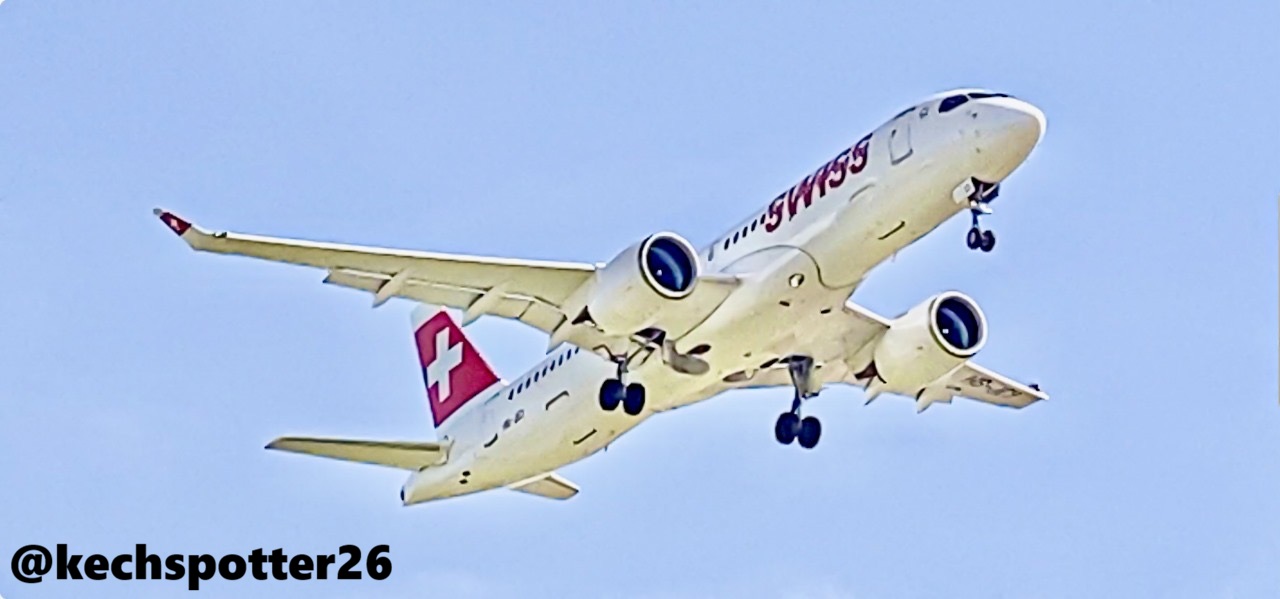
As of 2026 the A220 family has two variants flying. The A220-100 seats roughly 100 to 135 passengers depending on configuration, and the A220-300 stretches that to about 130 to 160. The -300 has been the real star of the programme. Airlines like Delta, JetBlue, Air France, Swiss, and Air Canada have been operating them on routes that used to be served by ageing A319s or 737-700s, and the feedback has been overwhelmingly positive.

Passengers tend to love it too. The cabin is 2-3 layout in economy, which means no middle seat. You get bigger windows, more overhead bin space, and it just feels less cramped than a typical narrowbody even though it technically seats fewer people. It's one of those planes where you step on board and immediately notice it's different.

Production wise, Airbus has been ramping up at the Mirabel plant near Montreal and at the Mobile, Alabama facility in the US. The goal has been to hit a combined rate of around 14 aircraft per month, though supply chain issues particularly around engines and some interior components have slowed that ambition a bit. Sound familiar? Basically every aircraft manufacturer is dealing with the same headaches right now.

The A220-500 question

This is the big one that everyone in the industry keeps talking about. The idea of a stretched A220-500 has been floating around for years and it's slowly moving from rumour into something that looks increasingly likely. The logic is simple: there's a gap in the Airbus lineup between the A220-300 (which tops out around 160 seats) and the A320neo (which starts at around 150 but is really optimised for 180+). A220-500 would slot right in there, probably carrying 170 to 190 passengers.

Why does it matter? Well for one thing the A319neo has essentially been abandoned. Nobody's really ordering it because airlines find the A220-300 more efficient for that seat count anyway. A -500 variant would properly close that gap and give airlines a purpose built option rather than having to choose between a slightly too small A220-300 or a slightly too big A320neo for certain routes.

Airbus hasn't officially confirmed the programme as of the time of writing. But there have been enough hints from senior executives and enough engineering studies leaked to trade publications that most analysts expect a formal launch within the next couple of years. The engineering challenge isn't trivial stretching the fuselage means reinforcing the landing gear, potentially tweaking the wing, and making sure the PW1500G can handle the extra weight but none of that is insurmountable.

Production ramp-up challenges

Let's be honest, Airbus has had a tough time getting A220 production to where it wants it to be. The aircraft was designed and initially built in Canada, and while that manufacturing expertise is real, scaling it under Airbus ownership has been rocky at times. Engine deliveries from Pratt & Whitney have been a bottleneck across the entire geared turbofan family, not just for the A220. The PW1100G issues on the A320neo family have grabbed most of the headlines but the PW1500G has had its share of problems too, including the powder metal contamination issue that led to accelerated inspections across the fleet.

Still, things are moving in the right direction. The Mobile line has been maturing and the workforce there is getting more experienced. Airbus has said repeatedly that hitting rate 14 is a "when not if" situation. Getting to that point consistently would be a major milestone for the programme.

Market positioning and competition

The A220 occupies a sweet spot that honestly didn't really exist as a proper market segment until this aircraft came along. It's too big to be a regional jet but too small to be a mainline narrowbody in the traditional sense. And that's exactly why it works airlines are finding routes that were either marginal with a 180-seat jet or impossible with a 100-seat regional, and the A220 makes them profitable.

In terms of direct competition, Embraer's E2 family is the closest rival. The E195-E2 in particular goes head to head with the A220-100 and the lower end of the -300. Both are excellent aircraft. The E2 has the advantage of being a known quantity from a manufacturer that's been doing this size category for decades. The A220 counters with its wider cabin, slightly better per-seat economics on the -300, and the Airbus brand behind it.

Boeing doesn't really have an answer in this segment right now. The 737-7 has barely any orders, and the company's attention is understandably focused on fixing the 737 MAX programme and getting the 777X into service. A clean sheet small narrowbody from Boeing feels like something that's at least a decade away, if it happens at all.

What to watch for

Over the next few years, the key milestones for the A220 programme are going to be:

  • Production rate 14 Consistently hitting this across both Mirabel and Mobile would signal that the supply chain headaches are finally under control.
  • A220-500 launch decision If and when Airbus pulls the trigger, this would be one of the biggest commercial aviation announcements in years.
  • Engine reliability improvements Pratt & Whitney's work on the PW1500G durability is crucial. Airlines need to trust that these engines can stay on wing long enough to make the economics work without constant shop visits.
  • New operator announcements Every time a major airline places a big A220 order, it validates the programme further. Keep an eye on Asian and Middle Eastern carriers in particular.

The A220 is still relatively early in its life as an Airbus product. The aircraft itself is proven, the market clearly wants it, and the roadmap has room to grow. Whether Airbus can execute on production and eventually launch the -500 will determine if the A220 becomes a cornerstone of the lineup or stays a niche player. Based on everything we're seeing right now, the former looks a lot more likely than the latter.

Further reading