
Airbus A340: The Quad-Engine Long-Haul Giant
Long before twin engine widebodies took over international travel, the Airbus A340 ruled oceanic crossings. Designed alongside the twin engine A330, this quad jet gave airlines the peace of mind to fly non stop across the Pacific without worrying about early diversion limits.
- Sister Jet Commonality: Shared the exact same cockpit layout and fuselage cross section with the twin engine A330.
- Oceanic Freedom: Flew remote polar and oceanic routes without needing twin engine diversion clearance.
- The Longest Stretched Jet: The A340 600 was the longest passenger aircraft in the sky until the Boeing 747 8 debuted.
A Tale of Two Sister Jets
Back in the late 1980s, Airbus had a clever plan. Rather than designing two completely separate widebody planes from scratch, they developed the twin engine A330 and the four engine A340 in tandem. Both shared the same wing design, fuselage diameter, and electronic fly by wire cockpit.
Airlines loved the flexibility. Pilots could transition between both aircraft with minimal training, and ground teams used interchangeable parts. While the A330 handled medium and long range flights over land, the four engine A340 was the flagship for long oceanic journeys.
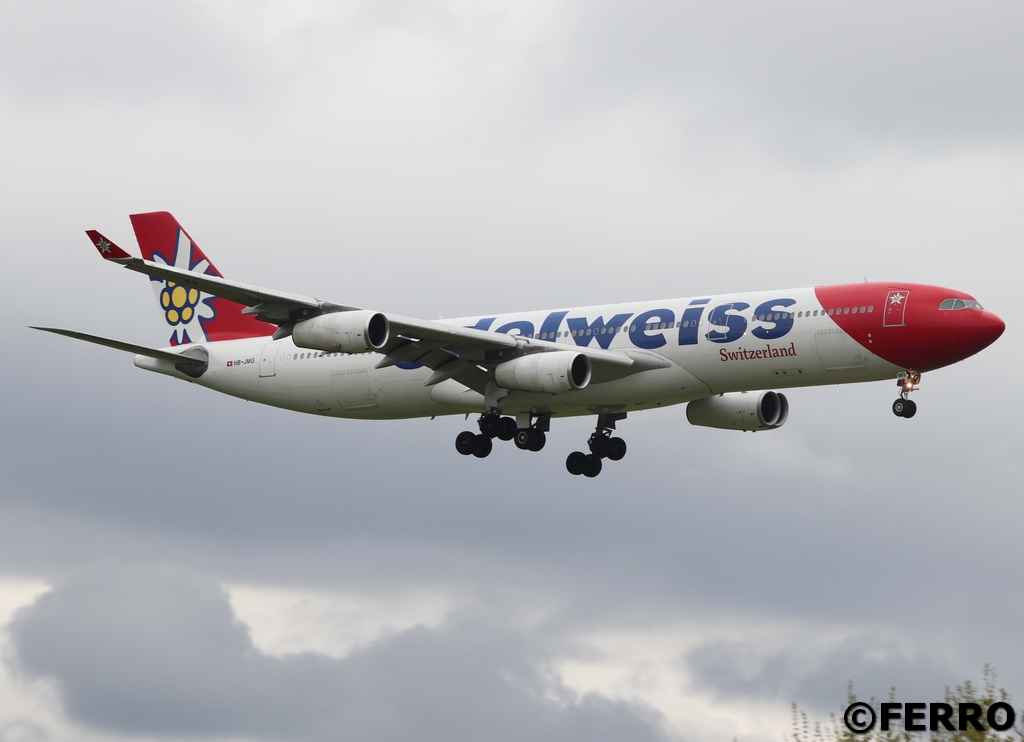
The Classic 200 and 300 Series
The early A340 variants entered commercial service in 1993, powered by four CFM56 engines. Passengers loved how quiet the cabin was on overnight flights. The A340 300 became the core workhorse for airlines like Lufthansa and Singapore Airlines, while the shorter A340 200 delivered incredible range for lighter passenger loads. In 1993, a special A340 200 dubbed the World Ranger flew around the globe with only one stopover to demonstrate its nonstop endurance.
The Heavyweights: 500 and 600
By the early 2000s, Airbus wanted to push range and capacity even further. They fitted massive Rolls Royce Trent 500 engines to create the ultra long haul A340 500 and the stretched A340 600.
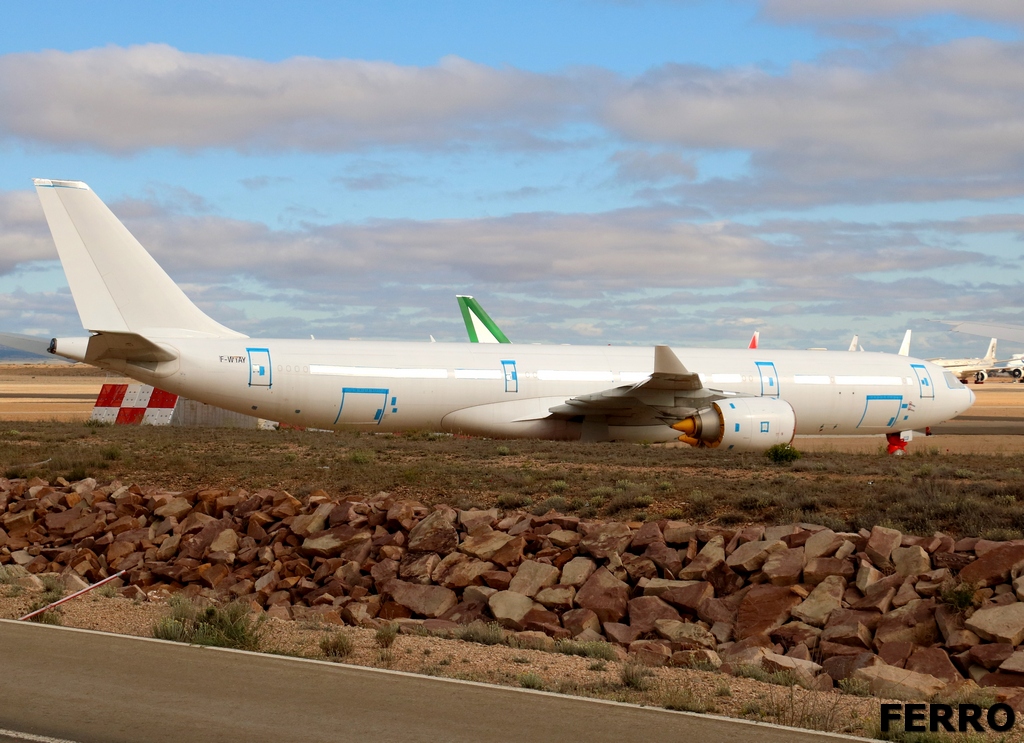
The A340 500 pioneered epic eighteen hour non stop flights between Singapore and New York. Meanwhile, the stretched A340 600 stretched over seventy five meters long, making it a huge crowd favorite at airports across the world.
Technical Specifications
| Feature | A340 300 | A340 600 |
|---|---|---|
| Capacity | 295 to 375 passengers | 380 to 440 passengers |
| Range | 13,500 km | 14,450 km |
| Wingspan | 60.3 meters | 63.45 meters |
| Length | 63.69 meters | 75.36 meters |
| Engines | 4x CFM56 5C | 4x Rolls Royce Trent 500 |
Why Two Engines Won Out
The A340 was a magnificent engineering achievement, but jet engine reliability improved much faster than anyone expected. As big twin engine planes like the Boeing 777 and Airbus A350 earned extended overwater clearance, airlines simply could not justify the fuel burn and maintenance bills of four engines when two could do the job. Airbus ended A340 production in 2011 after delivering 377 aircraft.
Even as they retire from passenger service, the graceful lines of a four engine A340 climbing out on a long flight will always hold a special place in aviation history.